Resolves as YES if there is strong evidence that OpenAI discovered the first valid proof of the Riemann Hypothesis before January 1st 2027. Only proofs made public before 2027 are considered, and the public release date determines which proof is deemed the “first.” If at least one candidate proof from OpenAI is made public before the end date but its validity remains uncertain, the end date can be extended until the proof’s validity is resolved. Both proofs that demonstrate the hypothesis or demonstrate that it's undecidable are acceptable in the context of this question. Proofs that the hypothesis is false are also acceptable.
If another entity makes a proof public first and that proof is considered valid, this question automatically resolves as NO. Similarly, if no publicly known OpenAI proof emerges before January 1st 2027, the question resolves as NO.
Examples of what qualifies as a "proof from OpenAI” include, but are not limited to:
Papers published to arXiv (or other preprint servers) with OpenAI researchers listed as authors.
Peer-reviewed journal or conference publications with (strongly) OpenAI-affiliated authors.
White papers or technical reports released on official OpenAI channels (e.g., blogs, GitHub, or websites).
Work using proprietary OpenAI models (not publicly available), where the researchers have privileged access and rely on OpenAI’s own compute resources or those provided through partnerships (e.g., Microsoft). Proofs discovered by running on third-party servers outside such partnerships (e.g., a university cluster) do not qualify under this condition.
A public release of any document or presentation that claims to prove the Riemann Hypothesis—produced (or co-produced) by OpenAI researchers and using OpenAI resources—will be sufficient to trigger a YES resolution if no other valid proof has been released prior to it. If the validity of an OpenAI proof remains uncertain by January 1st 2027, the resolution date may be postponed until its validity is established.
 1,000
1,000People are also trading



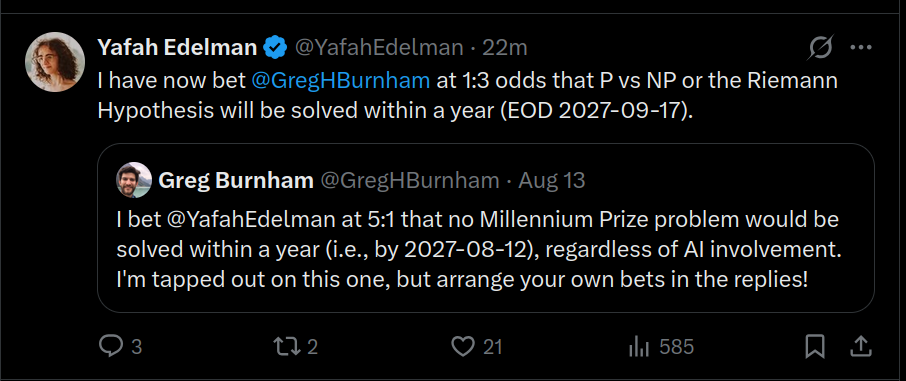
@ZacharyKleinfa41 Feel free to take my limit at 10% if you want. My odds on this resolving YES is not that much higher than 14%, and I have low balance right now due to other bets (e.g. locked in this market), so I'm not opposed to taking a limit you'd put at 14%, but probably wouldn't right now.
@BionicD0LPH1N I don't think I'll do anymore at 10% at this point but I have some more at 14%

@0xseraphim If my portfolio was bigger I would be more at worse prices, but I don't think that I can justify putting more than 60% into one market, so now I gotta charge a premium :/
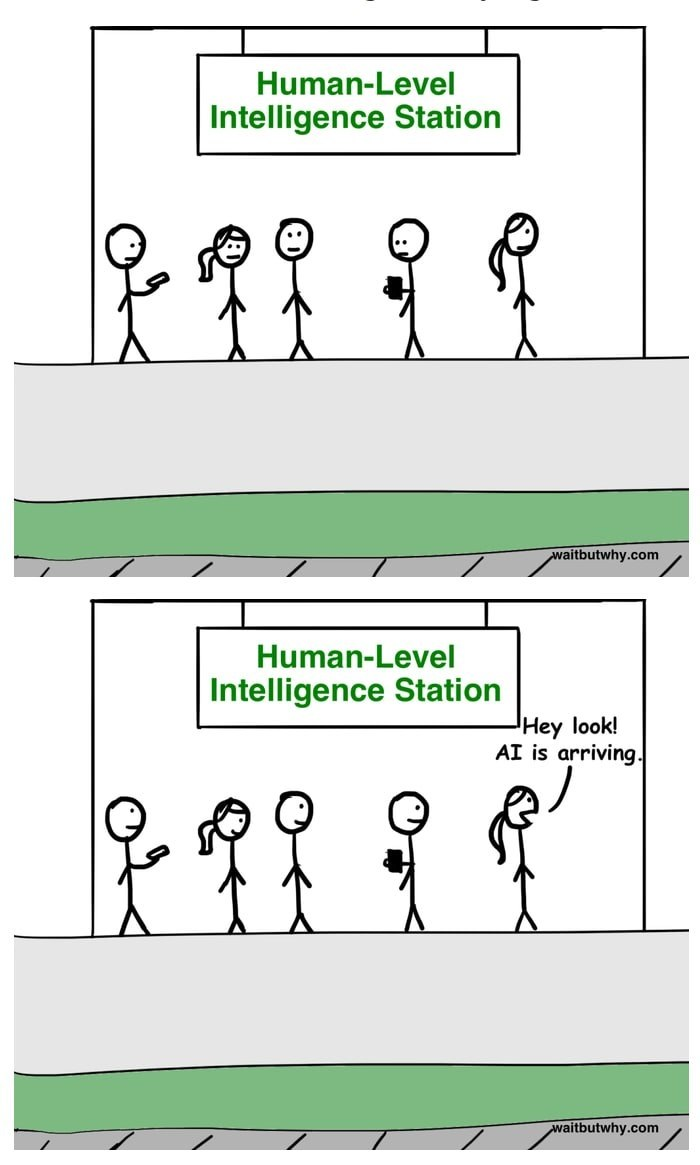
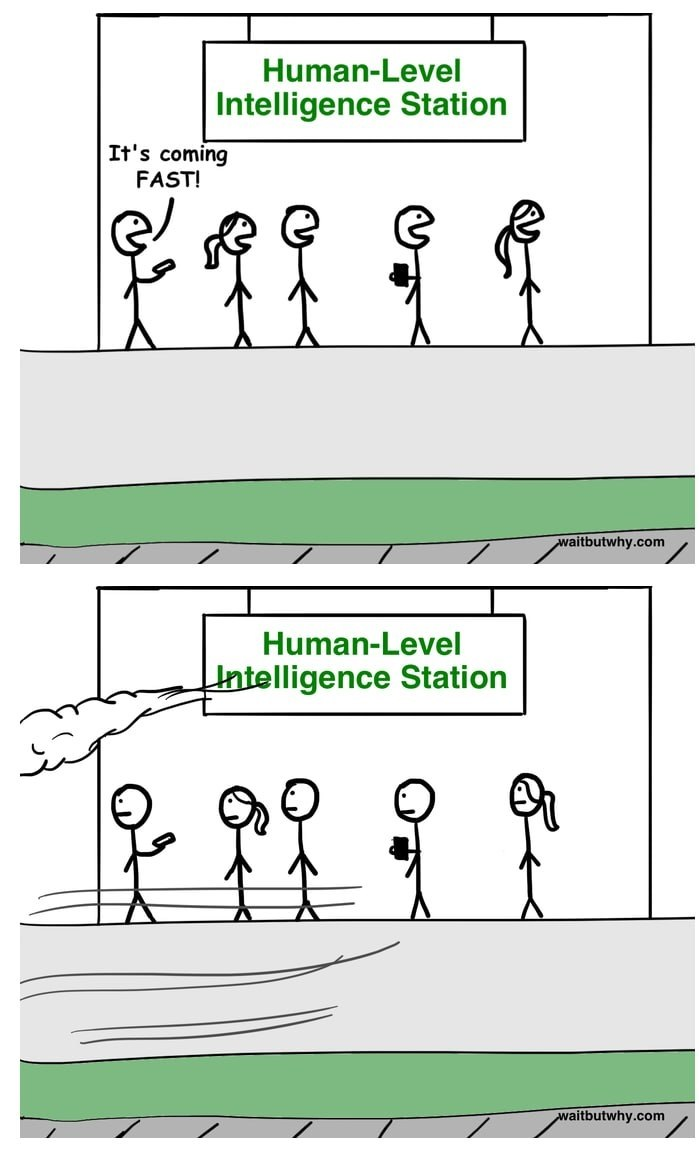
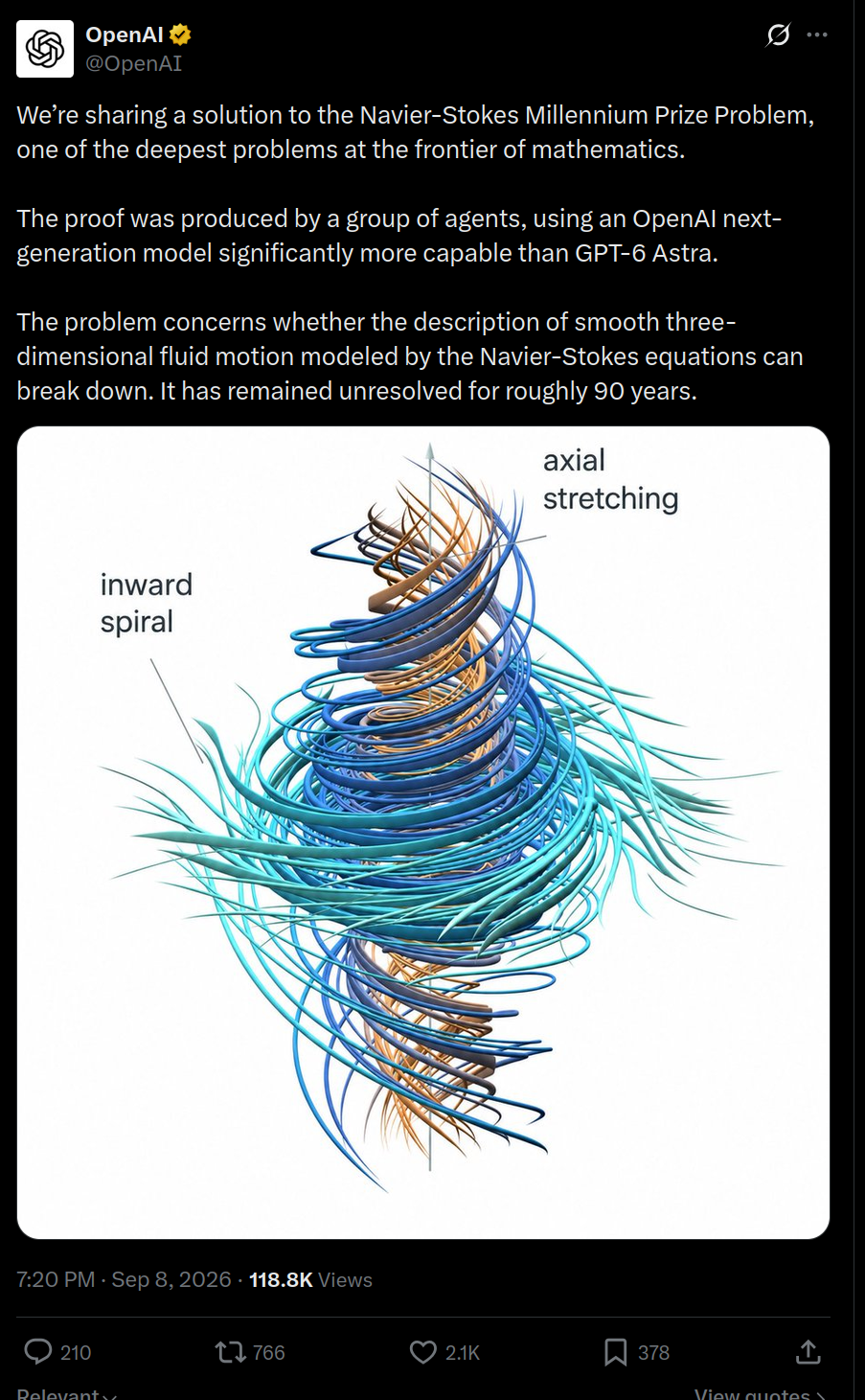
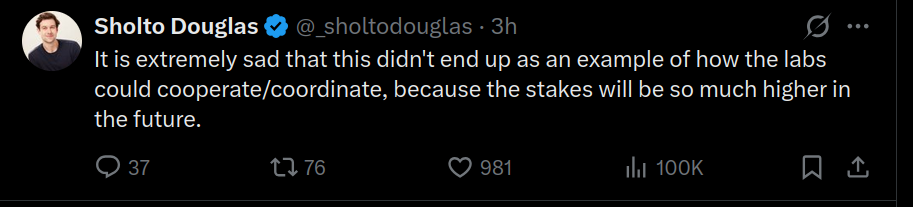


@0xseraphim I don't log on here every day lol. Happy to continue betting no as none of the things you posted below, and not even the Navier-Stokes result, are much evidence towards them solving Riemann by EoY
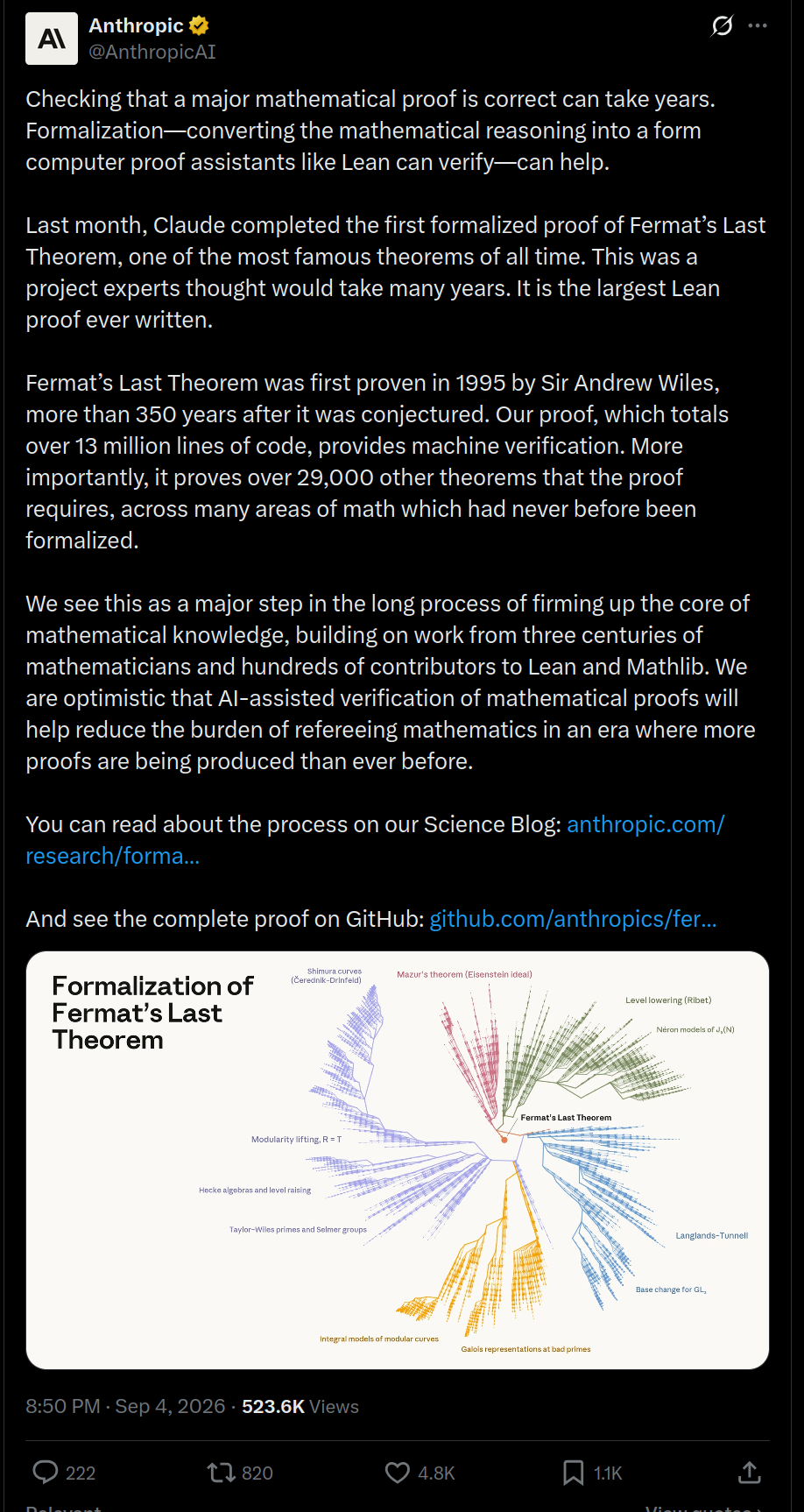
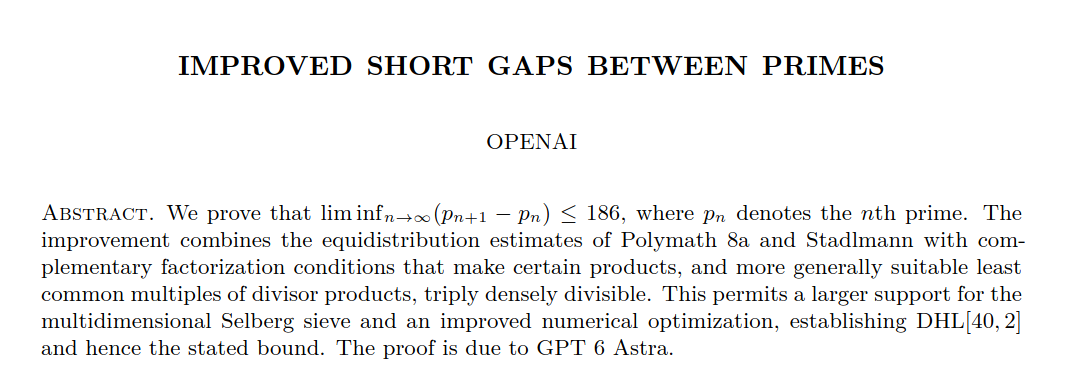
https://cdn.openai.com/pdf/51126fac-1b68-4128-9666-c908bcc16033/short_gaps.pdf
OpenAI astra experiments are appearing
@0xseraphim You would do well to follow some actual mathematicians instead of just AI companies. This OpenAI result is just a minor improvement on the result of Stadlmann. Stadlmann clearly states her result is not optimal in the paper.
@pietrokc You would do well to remember that this market is about whether OpenAI publishes the first valid proof of Riemann before 2027, not whether this particular result (linked above) is a major breakthrough
